Buy smartaging.eu ?
We are moving the project
smartaging.eu .
Are you interested in purchasing the domain
smartaging.eu ?
domain@kv-gmbh.de · 0541-91531010
Buy smartaging.eu ?
Is my plant a spider plant?
I'm an AI and I don't have the ability to see your plant. However, spider plants are characterized by their long, arching leaves with white stripes. They also produce small white flowers and baby plantlets that dangle from the mother plant. If your plant matches these descriptions, it is likely a spider plant. If you're still unsure, you can search for images of spider plants online to compare with your plant. **
Is my spider plant sick?
To determine if your spider plant is sick, look for signs such as yellowing or browning leaves, wilting, or unusual spots on the leaves. Check the soil moisture level to ensure you are not overwatering or underwatering the plant. Spider plants are generally hardy and can recover from minor issues with proper care, such as adjusting watering frequency or providing adequate sunlight. If the symptoms persist or worsen, consider repotting the plant in fresh soil and trimming any damaged leaves to encourage new growth. **


Similar search terms for Spider plant
Top-Angebote
Products related to Spider plant:
-
HQ The Greenprint: Plant-Based Diet, Best Body, Better World by Marco Borges - Paperback - Non Fiction Health & Nutrition Guide with 60+ Plant-BasedDiscover a practical guide to a plant-based lifestyle with The Greenprint by Marco Borges. This accessible paperback offers a clear path to transforming your health and reducing your environmental footprint, one meal at a time. Written by a New York Times bestselling author and CEO of 22 Days Nutrition, the book blends nutrition science with real-world habits. Featuring an introduction from Jay-Z and Beyoncé, it provides a gradual and sustainable approach to shifting toward a greener, healthier way of eating. The Greenprint sets out Marco Borges's proven plant-based framework, built around his signature '22 Laws of Plants' for a healthier way of eating.3,99 £*Shipping: 2,99 £Secure redirect to the provider
-
Pavilion Books Vegan Savvy by Azmina Govindji - Expert's Guide to Nutrition on a Plant-Based Diet - Paperback - Vegan Nutrition & Health GuideVegan Savvy is a practical handbook for anyone eating a plant-based diet. Written by award-winning dietitian Azmina Govindji, it provides clear, evidence-based guidance on getting the nutrients your body needs from vegan food alone. Whether you're vegan-curious, newly plant-based, or years into the lifestyle, this accessible guide helps you eat well, avoid common pitfalls, and feel confident about your choices. The book is designed to make the transition to a plant-based diet simple, flexible, and nutritionally sound, without feeling restrictive or overwhelming. It's supported by The Vegan Society and the British Dietetic Association.3,49 £*Shipping: 2,99 £Secure redirect to the provider
-
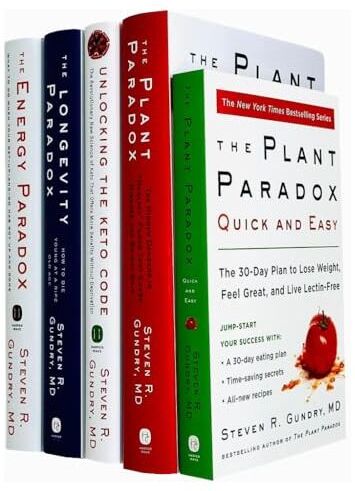
Harper ltd Dr Steven R Gundry 5 Books Collection Set – Plant Paradox, Diet & Gut Health Nutrition CollectionDr. Steven R Gundry MD 5 Books Collection Set (The Plant Paradox, The Longevity Paradox, The Energy Paradox, Unlocking The Keto Code & [Paperback] The Plant Paradox Quick and Easy): The Plant Paradox Quick and Easy[Paperback]: The Plant Paradox, readers learned the surprising truth about foods that have long been regarded as healthy. Lectins—a type of protein found in fruits, vegetables, legumes, dairy, and grains—wreak havoc on the gut, creating systemic inflammation and laying the groundwork for disease and weight gain. The Plant Paradox: In The Plant Paradox, renowned cardiologist Dr. Steven Gundry reveals that gluten is just one variety of a common, and highly toxic, plant-based protein called lectin. Lectins are found not only in grains like wheat but also in the “gluten-free” foods. The Longevity Paradox: Dr. Gundry has discovered that the “diseases of aging” we most fear are not simply a function of age; rather, they are a byproduct of the way we have lived over the decades. In The Longevity Paradox, he maps out a new approach to aging well—one that is based on supporting the health of the “oldest” parts of us: the microorganisms that live within our bodies. The Energy Paradox: Dr. Gundry expands upon his previous discussions of gut, microbiome, and mitochondrial health, linking immune malfunction to the mental and physical symptoms of fatigue—including exhaustion, brain fog, depression, anxiety, and low metabolism. Unlocking the Keto Code: In Unlocking the Keto Code, Dr. Gundry reveals the biological mechanism that makes keto diets so successful: a cellular process known as “mitochondrial uncoupling.” As it turns out, ketones are not the magical fuel source they’ve been made out to be.22,45 £*Shipping: 2,99 £Secure redirect to the provider



-
Does my spider plant have pests?
To determine if your spider plant has pests, you can inspect the leaves for any signs of small insects such as spider mites or aphids. Look for webbing or tiny dots on the leaves, which could indicate a pest infestation. Additionally, check the undersides of the leaves for any visible pests or their eggs. If you notice any of these signs, it is likely that your spider plant has pests and will require treatment to eliminate them. **
-
What does my spider plant have?
Your spider plant likely has small white flowers that bloom periodically. These flowers are typically small and delicate, and they can add a lovely touch to the overall appearance of the plant. Additionally, your spider plant may also have small plantlets, or baby spider plants, that grow on long stems extending from the main plant. These plantlets can be propagated to grow new spider plants, making them a popular choice for indoor gardeners. **
-
How long does a spider plant live?
A spider plant can live for several years if it is well cared for. With proper watering, light, and occasional repotting, a spider plant can thrive and continue to grow for many years. Some spider plants have been known to live for over a decade when given the right conditions. However, like all living things, the lifespan of a spider plant can vary depending on its environment and care. **
-
Is the spider plant toxic to rats?
Yes, spider plants are non-toxic to rats. They are safe to have in the same environment as rats and should not cause any harm if ingested. However, it's always a good idea to monitor your rats and their behavior around any new plants to ensure they do not show any signs of illness or discomfort. **


Is the spider plant poisonous to touch?
No, the spider plant (Chlorophytum comosum) is not poisonous to touch. In fact, it is considered to be non-toxic to humans and pets. This makes it a popular choice for indoor and outdoor gardens, as it is safe to handle and be around. However, while the spider plant is not poisonous, it is always a good idea to wash your hands after handling any plant, especially if you have sensitive skin or allergies. **
How can one propagate a spider plant?
Spider plants can be easily propagated by removing the plantlets, or baby spider plants, that grow from the parent plant. These plantlets can be gently removed and placed in water until they develop roots, or they can be planted directly into soil. Another method is to propagate spider plants by dividing the parent plant at the roots and replanting the divided sections. Spider plants are quite resilient and can quickly establish themselves when propagated using these methods. **
Top-Angebote
Products related to Spider plant:
-
Nearly Natural "33"" Spider Artificial Plant in Cylinder Planter"With green and yellow spears of foliage creeping out of the included cylindrical vase, this artificial spider plant is a perfect addition to almost any office and living space.121,49 $*Shipping: 0,00 $Secure redirect to the provider
-
HQ The Greenprint: Plant-Based Diet, Best Body, Better World by Marco Borges - Paperback - Non Fiction Health & Nutrition Guide with 60+ Plant-BasedDiscover a practical guide to a plant-based lifestyle with The Greenprint by Marco Borges. This accessible paperback offers a clear path to transforming your health and reducing your environmental footprint, one meal at a time. Written by a New York Times bestselling author and CEO of 22 Days Nutrition, the book blends nutrition science with real-world habits. Featuring an introduction from Jay-Z and Beyoncé, it provides a gradual and sustainable approach to shifting toward a greener, healthier way of eating. The Greenprint sets out Marco Borges's proven plant-based framework, built around his signature '22 Laws of Plants' for a healthier way of eating.3,99 £*Shipping: 2,99 £Secure redirect to the provider
-
Pavilion Books Vegan Savvy by Azmina Govindji - Expert's Guide to Nutrition on a Plant-Based Diet - Paperback - Vegan Nutrition & Health GuideVegan Savvy is a practical handbook for anyone eating a plant-based diet. Written by award-winning dietitian Azmina Govindji, it provides clear, evidence-based guidance on getting the nutrients your body needs from vegan food alone. Whether you're vegan-curious, newly plant-based, or years into the lifestyle, this accessible guide helps you eat well, avoid common pitfalls, and feel confident about your choices. The book is designed to make the transition to a plant-based diet simple, flexible, and nutritionally sound, without feeling restrictive or overwhelming. It's supported by The Vegan Society and the British Dietetic Association.3,49 £*Shipping: 2,99 £Secure redirect to the provider
-
Is my plant a spider plant?
I'm an AI and I don't have the ability to see your plant. However, spider plants are characterized by their long, arching leaves with white stripes. They also produce small white flowers and baby plantlets that dangle from the mother plant. If your plant matches these descriptions, it is likely a spider plant. If you're still unsure, you can search for images of spider plants online to compare with your plant. **
-
Is my spider plant sick?
To determine if your spider plant is sick, look for signs such as yellowing or browning leaves, wilting, or unusual spots on the leaves. Check the soil moisture level to ensure you are not overwatering or underwatering the plant. Spider plants are generally hardy and can recover from minor issues with proper care, such as adjusting watering frequency or providing adequate sunlight. If the symptoms persist or worsen, consider repotting the plant in fresh soil and trimming any damaged leaves to encourage new growth. **
-
Does my spider plant have pests?
To determine if your spider plant has pests, you can inspect the leaves for any signs of small insects such as spider mites or aphids. Look for webbing or tiny dots on the leaves, which could indicate a pest infestation. Additionally, check the undersides of the leaves for any visible pests or their eggs. If you notice any of these signs, it is likely that your spider plant has pests and will require treatment to eliminate them. **
-
What does my spider plant have?
Your spider plant likely has small white flowers that bloom periodically. These flowers are typically small and delicate, and they can add a lovely touch to the overall appearance of the plant. Additionally, your spider plant may also have small plantlets, or baby spider plants, that grow on long stems extending from the main plant. These plantlets can be propagated to grow new spider plants, making them a popular choice for indoor gardeners. **
Similar search terms for Spider plant
-
Harper ltd Dr Steven R Gundry 5 Books Collection Set – Plant Paradox, Diet & Gut Health Nutrition CollectionDr. Steven R Gundry MD 5 Books Collection Set (The Plant Paradox, The Longevity Paradox, The Energy Paradox, Unlocking The Keto Code & [Paperback] The Plant Paradox Quick and Easy): The Plant Paradox Quick and Easy[Paperback]: The Plant Paradox, readers learned the surprising truth about foods that have long been regarded as healthy. Lectins—a type of protein found in fruits, vegetables, legumes, dairy, and grains—wreak havoc on the gut, creating systemic inflammation and laying the groundwork for disease and weight gain. The Plant Paradox: In The Plant Paradox, renowned cardiologist Dr. Steven Gundry reveals that gluten is just one variety of a common, and highly toxic, plant-based protein called lectin. Lectins are found not only in grains like wheat but also in the “gluten-free” foods. The Longevity Paradox: Dr. Gundry has discovered that the “diseases of aging” we most fear are not simply a function of age; rather, they are a byproduct of the way we have lived over the decades. In The Longevity Paradox, he maps out a new approach to aging well—one that is based on supporting the health of the “oldest” parts of us: the microorganisms that live within our bodies. The Energy Paradox: Dr. Gundry expands upon his previous discussions of gut, microbiome, and mitochondrial health, linking immune malfunction to the mental and physical symptoms of fatigue—including exhaustion, brain fog, depression, anxiety, and low metabolism. Unlocking the Keto Code: In Unlocking the Keto Code, Dr. Gundry reveals the biological mechanism that makes keto diets so successful: a cellular process known as “mitochondrial uncoupling.” As it turns out, ketones are not the magical fuel source they’ve been made out to be.22,45 £*Shipping: 2,99 £Secure redirect to the provider
-
How long does a spider plant live?
A spider plant can live for several years if it is well cared for. With proper watering, light, and occasional repotting, a spider plant can thrive and continue to grow for many years. Some spider plants have been known to live for over a decade when given the right conditions. However, like all living things, the lifespan of a spider plant can vary depending on its environment and care. **
-
Is the spider plant toxic to rats?
Yes, spider plants are non-toxic to rats. They are safe to have in the same environment as rats and should not cause any harm if ingested. However, it's always a good idea to monitor your rats and their behavior around any new plants to ensure they do not show any signs of illness or discomfort. **
-
Is the spider plant poisonous to touch?
No, the spider plant (Chlorophytum comosum) is not poisonous to touch. In fact, it is considered to be non-toxic to humans and pets. This makes it a popular choice for indoor and outdoor gardens, as it is safe to handle and be around. However, while the spider plant is not poisonous, it is always a good idea to wash your hands after handling any plant, especially if you have sensitive skin or allergies. **
-
How can one propagate a spider plant?
Spider plants can be easily propagated by removing the plantlets, or baby spider plants, that grow from the parent plant. These plantlets can be gently removed and placed in water until they develop roots, or they can be planted directly into soil. Another method is to propagate spider plants by dividing the parent plant at the roots and replanting the divided sections. Spider plants are quite resilient and can quickly establish themselves when propagated using these methods. **
* All prices are inclusive of VAT and, if applicable, plus shipping costs. The offer information is based on the details provided by the respective shop and is updated through automated processes. Real-time updates do not occur, so deviations can occur in individual cases. ** Note: Parts of this content were created by AI.